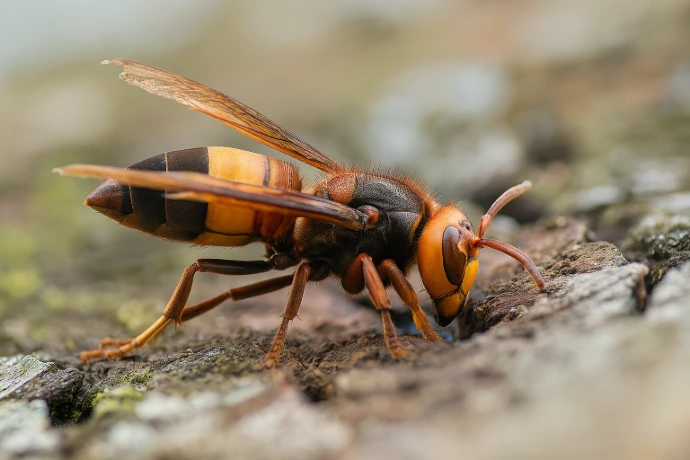
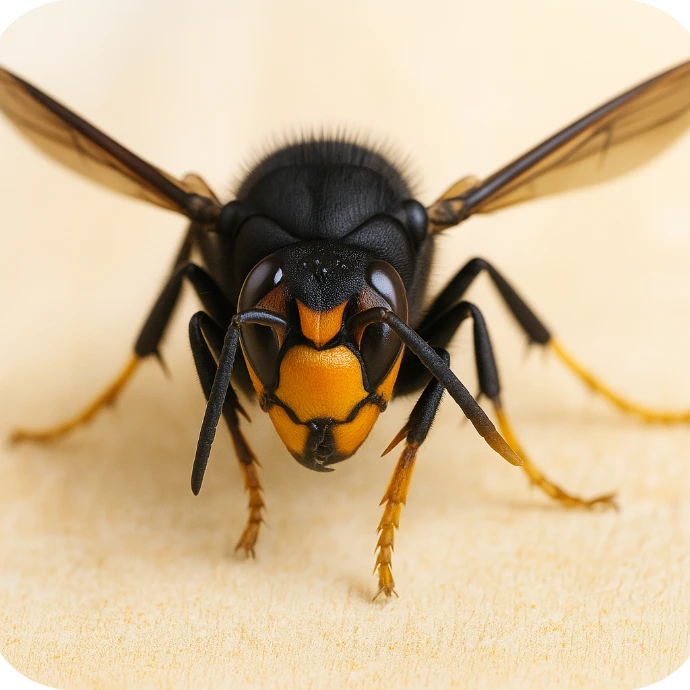
Die Asiatische Hornisse
Eine dringende ökologische Bedrohung in Europa
Warum ein Nest eines zu viel ist
Pro sekundärem Nest werden pro Jahr:
11,3 kg
Insekten
1.400
Arten
45.000
Honigbienen
3.000-8.000
Hornissen geboren
25-50
Befruchtete Königinnen überleben den Winter,
und wiederholen den Zyklus
2004
2010
2011
2012
2014
2016
2017
2018
2020
2023
2024
2025
Frankreich
Spanien
Portugal
Italien
Deutschland
Belgien, das UK
Niederlande
Mallorca
Schweiz, Luxemburg
Ungarn
Österreich, Slowakei
Irland
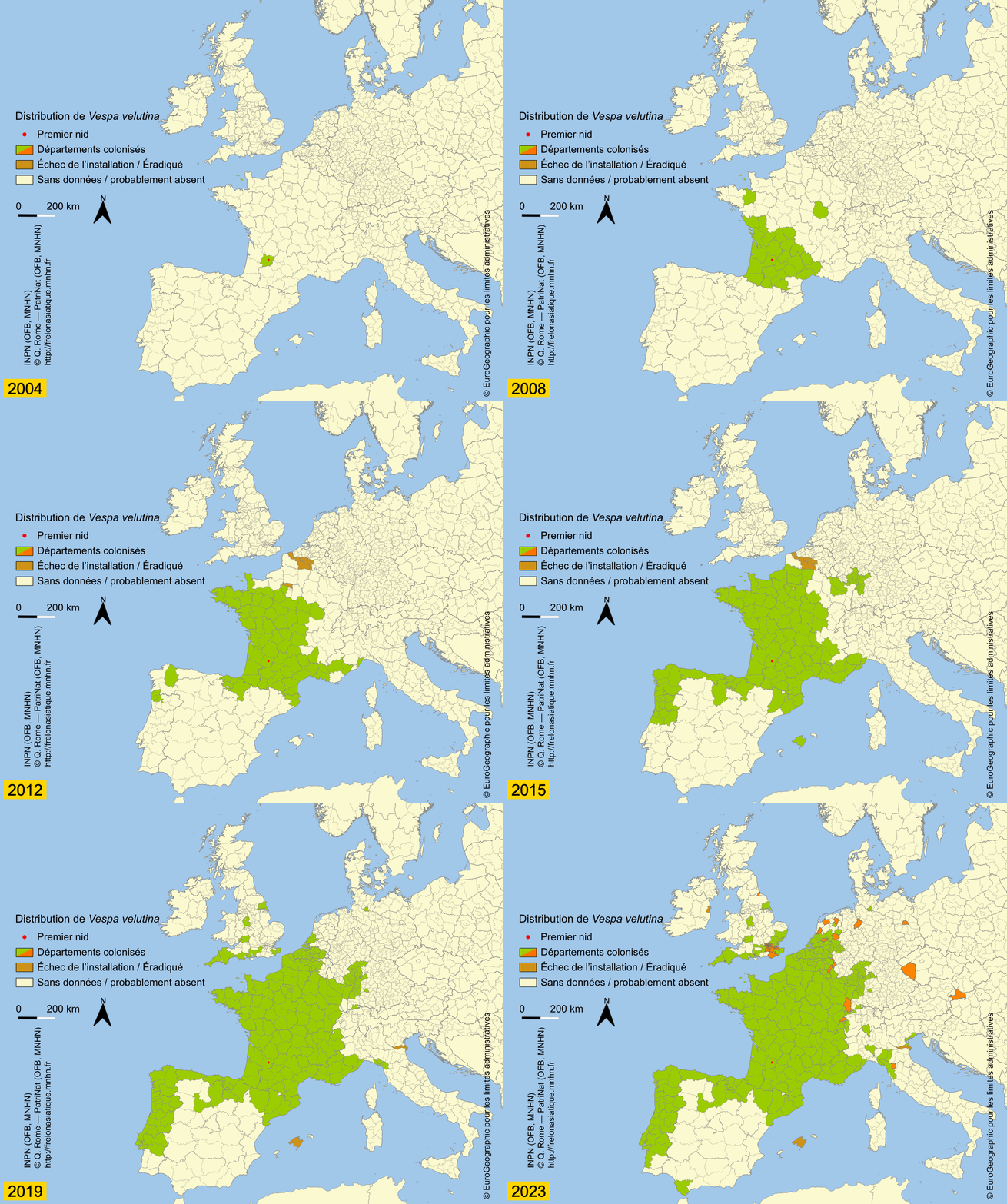
Die Verbreitung in Europa seit 2004
Im Jahr 2004 erreichte eine Königin der Asiatischen Hornissen den Sudwesten Frankreichs, versteckt in einer Lieferung aus China.
Wenige Jahre später hatte sich die Art bereits über Europa verbreitet - mit schwerwiegenden Folgen für Bienen und die Biodiversität.
Heute ist die Asiatische Hornisse in mehr als 13 Ländern verbreitet und breitet sich weiterhin aus.
Frankreich
Es gibt schätzungsweise ≥500.000 Nester, mit einer geschätzten wirtschaftlichen Auswirkung von 30,8 Millionen Euro pro Jahr durch den Verlust von Bienenvölkern, Bestäubung und Honigproduktion.
Darüber hinaus werden jährlich etwa 12 Millionen Euro an öffentlichen Mitteln widmet sich der Auffindung und Zerstörung von Nestern.
Portugal
Es werden bis zu 5 Nester pro km² festgestellt, mit bis zu 50% Verlust von Bienenvölkern und einem Rückgang der Honigproduktion um 35%.
Auch der Wein- und Obstbau sind stark betroffen, da reifende Früchte in Weinbergen und Obstgärten beschädigt werden (bis zu 75% Schäden an Trauben).
Belgien
Die Anzahl der Nester hat sich 2023 verfünffacht und wird voraussichtlich 2025 in Flandern allein 10.000 überschreiten.
Etwa 11% der belgischen Landwirtschaft, was €250 Millionen pro Jahr, ausmacht, ist auf Bestäubung angewiesen — bis zu 64% im Obstsektor.
In Belgien, Flandern - Anzahl der gemeldeten Nester
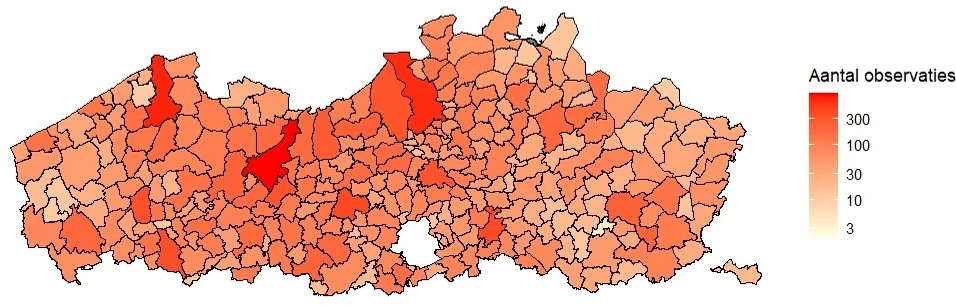
Anzahl pro Gemeinde im Jahr 2025
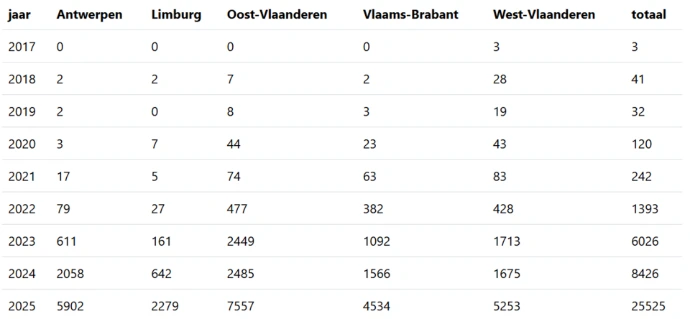
Anzahl pro Provinz, pro Jahr seit 2017
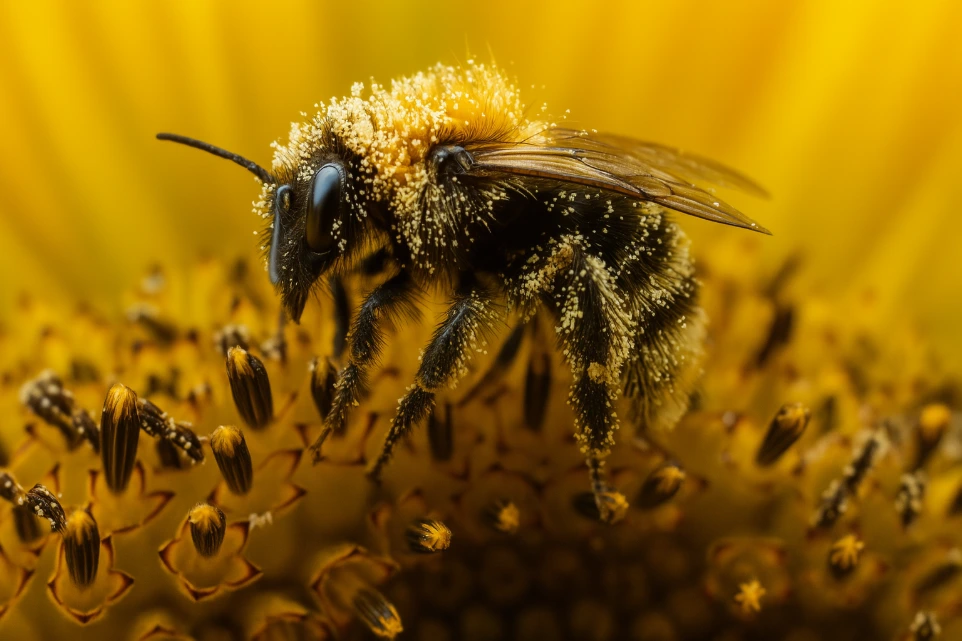
Warum eine skalierbare Lösung dringend benötigt wird
Bestäuber und Honigbienen bilden das Rückgrat unserer Landwirtschaft.
Sie sorgen für etwa 80% aller Bestäubung und unterstützen mehr als ein Drittel unserer globalen Nahrungsmittelproduktion. Jede Biene besucht bis zu 5.000 Blumen pro Tag und trägt so zur Produktion von Obst, Gemüse, Nüssen und Samen bei — während sie in ihrem ganzen Leben kaum 1/12 eines Teelöffels Honig produziert.
Aber diese essentielle Arbeit steht zunehmend unter Druck.
Die Anwesenheit der Asiatischen Hornisse verursacht ‚Futterverlamung‘, wodurch sich die Bienen in ihren Kasten zurückziehen und aufhören, Nektar und Pollen zu sammeln – mit schwerwiegenden Folgen für ihr Überleben im Winter. Darüber hinaus kann eine Asiatische Hornisse bis zu 50 Bienen pro Tag fangen und fressen. Ein Nest vernichtet schätzungsweise 45.000 Honigbienen – was bis zu 225 Millionen verlorene Bestäubungsmomente pro Tag bedeutet.
Multipliziere dies mit Tausenden von Nester, und die Auswirkungen sind enorm – mit direkten Folgen für die Biodiversität, die Landwirtschaft und die Ernährungssicherheit.
SCHLIEßE DICH UNSERER MISSION AN
Wir konzentrieren uns nicht nur auf die Asiatische Hornisse – wir setzen einen neuen Standard.
Unsere modulare digitale Lösung ist bereit für die Herausforderungen von morgen.